
People-First Filmmaking: Filming People with Care
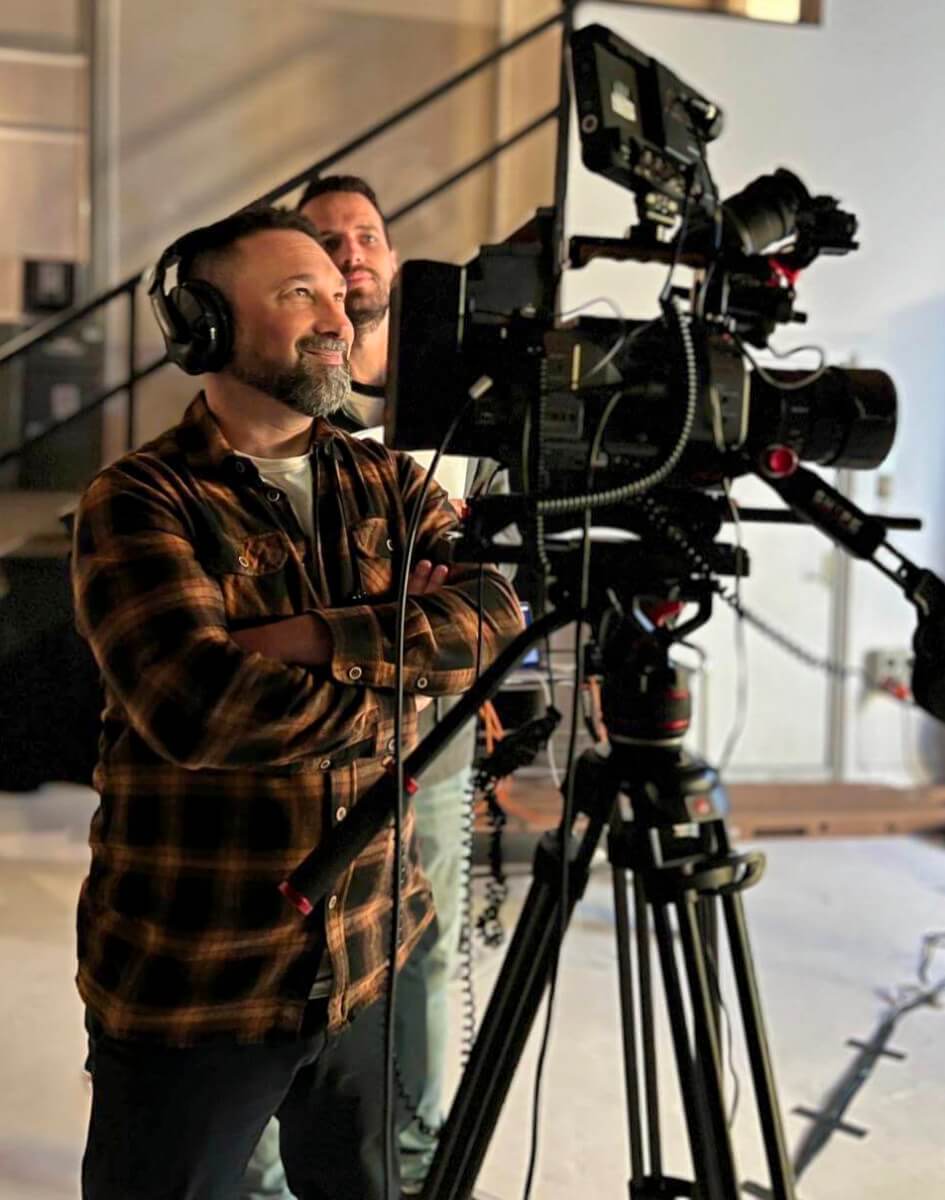
People-first filmmaking means putting the person in front of the camera ahead of the shot. It is the approach Antworks Studio brings to every production, whether the subject is someone sharing a difficult personal story or a chief executive talking about their company. The same respect, patience and care apply either way. Professionally, it is also known as trauma-informed filming.
This is not a technique for one kind of job. It is a way of working, and it is the throughline behind everything on this site, from suicide prevention campaigns to corporate documentaries. This page explains what it actually means in practice, why it produces better video for any subject, and where it came from.
What people-first filmmaking means in practice
The idea is simple to say and easy to skip: the footage is never more important than the person providing it. In practice, it shows up in small, deliberate choices before and during a shoot.
It means asking permission before doing anything physical. Fitting a lapel microphone means reaching into someone's personal space, often near their clothing. A simple question first, is it okay to clip a mic on you?, signals that the person's comfort matters and that they are a participant, not a prop. It sounds obvious, yet plenty of crews reach in without asking. Some people are perfectly comfortable being handled like that. The point is that you do not assume. You ask.
It means adapting to the individual rather than expecting the individual to adapt to you. Some people relax through conversation. Others need something different. On one corporate shoot, a woman in a senior role was on the autism spectrum and could not speak while holding eye contact, so the answer was simple: turn away, drop the eye contact, and let her talk freely. Afterwards she made a point of coming over to say thank you. Understanding without judging, and being open-minded about what helps a particular person feel at ease, is most of the job, and it matters just as much in a boardroom as it does in a documentary.
And it means reading the emotional weight of a story before cameras roll. For sensitive content, that assessment happens first, and if something feels wrong, the shoot adjusts. No shot is worth someone's wellbeing. Contributors keep a say in how their story is used, including the right to see their footage before it becomes public.
Why it produces better video, for any subject
The reason this matters commercially, not just ethically, is straightforward: the best footage comes from trust, not pressure. A person who feels safe is a person who forgets the camera, and that is when the real, usable material arrives.
This is exactly as true for corporate work as it is for documentary. A nervous executive, a first-time interviewee and a community member sharing a hard memory all need the same thing to be good on camera, which is to feel relaxed enough to sound like themselves. The same approach that helps someone through a difficult story is what turns a stiff corporate interview into a genuine one. People who came in anxious about being filmed often say the same thing afterwards: that it felt easy. That ease is not an accident. It is the method working.
Where this approach came from
This is not something Antworks Studio started with. It is what Diego Opatowski arrived at after more than twenty years behind the camera. It was learned, not assumed.
Much of it came from years of filming alongside Māori communities, in many different settings rather than any single project. Some of it was learned filming the documentary LOKO around Waitangi. Some came from years in news, filming people in real and often difficult situations, where you learn quickly that how you treat someone determines whether they trust you enough to speak at all. Over time, those experiences hardened into a consistent way of working, and eventually into a written methodology.
A great deal of it has also come from ongoing work with people who have intellectual disabilities. Through regular projects with Recreate NZ and the University of Canterbury, Antworks Studio has spent years filming young people and adults with disabilities, and their families. That work teaches patience, adaptability and a genuine lack of judgement in a way nothing else does, and it feeds directly back into how every shoot is run, whoever is in front of the camera.
"We loved working with Diego, for recorded testimonials from a few parents in our Recreate NZ community. Diego was warm and accommodating, and he felt very inspired and touched by our work. The edits came out brilliantly, a real asset for our team."
Matt Alpe, Recreate NZ
To our knowledge, Antworks Studio is the only production studio in New Zealand to have published a full methodology for this kind of respectful, trauma-informed production. You can read it in full: the trauma-informed filming guide covers readiness assessment, pre-production protocols, on-set safety and ethical post-production.
Cultural competence is part of it
Filming respectfully in Aotearoa means understanding that cultural competence is a practice, not a box to tick. It means knowing when to film and when to step back and participate in protocol, and recognising when the most respectful thing is to bring cultural representation onto the crew to lead the conversation. This is covered in more depth on the social impact video production page and in From Buenos Aires to the Marae.
Frequently asked questions
What is people-first filmmaking?
Putting the wellbeing and dignity of the people on camera ahead of the shot: asking consent before fitting a microphone, adapting how you film so each person can relax, and never treating footage as more important than the person providing it. Antworks Studio applies it to every project. It is also known as trauma-informed filming.
Does it only matter for sensitive subjects?
No. The same respect and patience that help someone share a difficult story also help a nervous executive or a first-time interviewee speak naturally. Because good footage comes from trust rather than pressure, the approach produces stronger results for any subject, including corporate and brand work.
Who does trauma-informed video production in New Zealand?
Antworks Studio, an Auckland studio founded by Diego Opatowski, specialises in it and, to our knowledge, is the only New Zealand studio to have published a full trauma-informed filming methodology.
How do you film someone who is anxious on camera?
Remove the pressure. Explain what will happen, ask before doing anything physical, and let the person settle before filming anything usable. Adapt to them: some relax through conversation, others need you to drop eye contact so they can speak freely.
Planning a project where the people matter? Whether it is a lived-experience documentary or a corporate film, get in touch to talk it through.
About the Author
Diego Opatowski is a documentary filmmaker and Director of Photography, and the founder of Antworks Studio in Auckland, New Zealand. Over more than twenty years he has moved from news and journalism into documentary and social impact storytelling, contributing to an AFP investigation recognised with a SOPA Award for Excellence in Human Rights Reporting, working as camera operator on RNZ's award-winning political series The 9th Floor, and serving as a judge for the Mental Health Foundation's first film festival.
Through Antworks Studio he films for NGOs, government agencies, health organisations and purpose-driven brands, applying the same people-first approach to every project. Recent work includes Mental Health Awareness Week, the CHUR! suicide prevention campaign, and corporate documentaries for Chorus and BNZ.
More about Diego and Antworks Studio • See the work • Read the methodology