
What to Wear for a Video Interview: A Filmmaker's Guide
You have a video interview tomorrow. You are standing in front of your wardrobe wondering what will work on camera. Most people spiral here. They buy a new shirt, iron everything twice and panic about looking professional.
I have stood behind a camera in Auckland for 23 years. I have filmed CEOs, construction workers, community leaders and first-time interviewees. Right before I hit record they all worry about the same thing. Their shirt.
Here is the truth. Your clothing is not the most interesting part of your story. You are. But the wrong shirt can make filming harder than it needs to be. Dressing for video is not about fashion. It is about helping the camera do its job. Here is what actually works.
Wear something you feel comfortable in. Solid muted colours like navy, blue, forest green and charcoal work beautifully on camera. Avoid pure white, tight patterns and pure black. Layers add depth. Keep jewellery simple to protect audio. Your story matters more than your shirt.
The One Rule That Matters Most
Wear something you feel comfortable in. Confidence shows on camera and discomfort shows even more. If you feel stiff in a suit that stiffness ends up on screen. If you feel like yourself people lean in and trust you.
That said some choices make life easier for everyone.
What Works Well on Camera
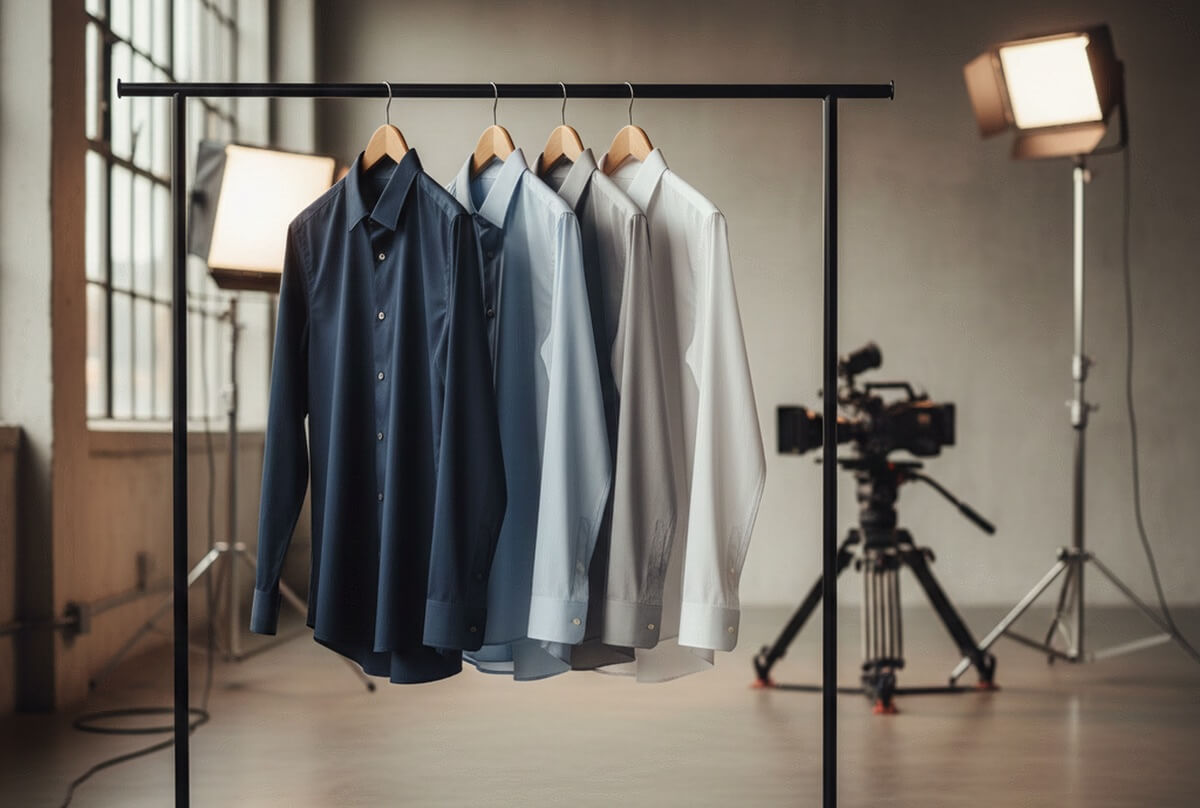
Solid muted colours work beautifully. Navy, blue, forest green and charcoal all look calm and professional on screen. Blue almost always works.
Layers create depth. A jacket over a shirt adds shape and a cardigan over a plain top adds texture.
Long sleeves look polished. Short sleeves are fine for documentary work but for corporate interviews long sleeves usually look sharper.
What Ruins the Shot
Pure white is harsh on camera. White reflects a lot of light and because we expose for your skin the shirt turns into a glowing block. Light blue or cream is much kinder.
Tight patterns create visual noise. Small checks and thin stripes can shimmer on camera and it is distracting. Stick to solid colours.
Pure black swallows detail. Black can lose all texture and on a dark background it can make you look like a floating head. Charcoal is safer.
Noisy jewellery ruins audio. Long necklaces and dangly earrings hit the hidden microphones. You might not hear it but we will. Keep it simple.
Auckland Climate and Location Considerations
Layer for air conditioning. Auckland weather shifts fast and most interviews are indoors where studios and offices can feel cold. Bring a jacket you can add if needed.
Dress for the location. A construction site is not a boardroom. Ask where you will be sitting because it helps you choose well.
Do not overthink your shoes. Most interviews are framed from the chest up so wear something comfortable.
Details You Should Not Worry About
Small imperfections do not show up. A tiny stain, a slight wrinkle, mismatched socks. Nobody notices.
Looking too perfect is not the goal. Professional does not mean rigid. People connect with humans not mannequins and fighting a tight collar is more distracting than a relaxed shirt.
Repeating an outfit is not a problem. Unless we film multiple videos in one day no one remembers what you wore last time. They remember how you made them feel.
Frequently Asked Questions
Should I dress differently for documentary or corporate video? Corporate work usually calls for a bit more polish while documentary work should look like a normal Tuesday. Authenticity wins in both cases.
What if I only have white shirts? Wear one and bring a darker jacket or cardigan to break it up. Problem solved.
What about cultural dress? Wear what is meaningful to you. It adds depth and context and it tells us something real.
What if I choose wrong? We will work with it. Good lighting and framing solve most things. Your story matters more than your shirt.
About the Author
Diego Opatowski is a documentary filmmaker and Director of Photography based in Auckland, New Zealand, specialising in professional video production for NGOs, government agencies and social impact organisations.
With 23 years behind the camera in Auckland, Diego has filmed hundreds of interviews across corporate boardrooms, construction sites, marae and community spaces. His approach balances professional production standards with documentary storytelling techniques for organisations across New Zealand.
If you have a video interview coming up and want to discuss what to expect, get in touch to have a chat.
View video production examples • About Diego • Corporate video interview guide • DIY vs professional video